The New Corner Office Flex: Why Bold Headwear Is Taking Over Creative Workplaces

Forget the power suit. A new generation of designers, entrepreneurs, and creative professionals is clocking into work with something far more expressive on their heads. Oversized caps have quietly become one of the boldest personal brand statements you can make in a modern American workplace — and the people wearing them aren't apologizing for it.
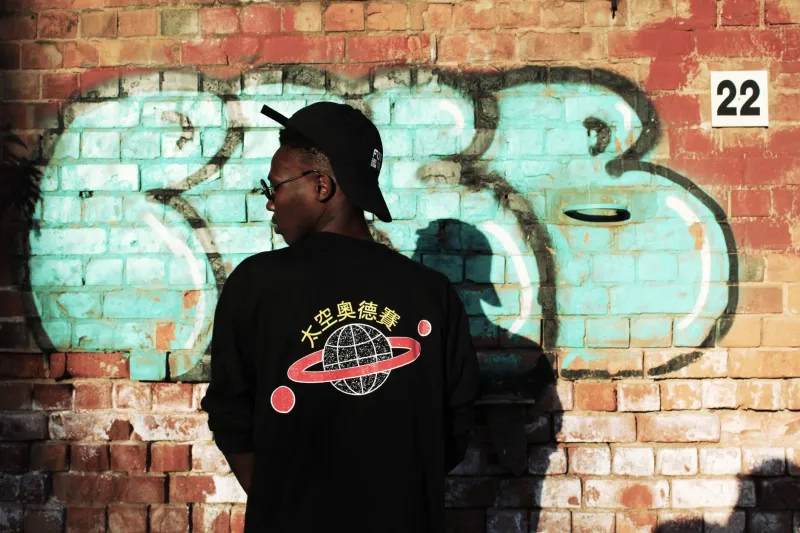
There's a phrase floating around creative offices from Brooklyn to Culver City right now: big hat energy. It's not just about the cap itself. It's about the attitude that comes with it — the unspoken message that says you know who you are, you're not here to blend in, and you've got the work to back it up.
Dress Codes Are Losing the Plot
For decades, American workplace culture ran on a pretty rigid visual script. Suits meant authority. Ties meant seriousness. Anything too expressive meant you weren't a team player. But that script has been getting rewritten in real time, especially since remote work blew the doors off traditional office norms.
When workers started logging into Zoom calls from their living rooms in hoodies and snapbacks, something shifted. People realized that what they wore on their heads didn't change the quality of their ideas. And when offices started calling people back, a lot of those same workers weren't willing to leave their authentic style at the door.
The result? A slow but unmistakable creep of streetwear sensibility into professional spaces — and oversized caps are leading the charge.
Real People, Real Statements
Talk to creatives across the country and you'll hear the same thing: the cap isn't an accessory, it's armor.
Take a graphic designer at a mid-size agency in Chicago who wears a wide-brim structured cap to every client pitch. She'll tell you it's not about being casual — it's about being memorable. In a room full of people in blazers, she's the one the client remembers. The cap signals confidence before she's said a single word.
Or consider the independent architect in Austin who built his entire personal brand around a rotating collection of oversized fitted caps. His clients — mostly tech founders and boutique hotel developers — don't just tolerate the look. They seek him out because of it. The headwear communicates that he thinks differently, and in his industry, thinking differently is literally the product.
Then there's the entrepreneur in Atlanta who shows up to investor meetings in a boxy, logo-heavy cap pulled low. He's raised two rounds of funding and says the cap is a filter. "If someone's too distracted by what's on my head to hear what I'm saying, they're probably not the right partner anyway," he puts it plainly.
These aren't outliers. They're a pattern.
What 'Big Hat Energy' Actually Means
The term sounds playful, but there's something real underneath it. Big hat energy is about owning your presence in a space. It's the visual equivalent of walking into a room without asking for permission.
Psychologically, what you wear affects how you carry yourself — that's been studied and documented across behavioral research for years. But there's a specific thing that happens when someone wears something unconventional in a conventional setting and pulls it off. It communicates a kind of social confidence that people respond to, even if they can't name exactly why.
An oversized cap does that work in a way that a lot of other statement pieces don't. It sits at the top of the silhouette. It's the first thing people see. And when it's bold — when it's got scale, structure, and intention — it reframes the entire outfit below it. You're not just dressed. You're decided.
The Industries Leading the Shift
Not every workplace is ready for this conversation, and that's fine. But the industries where it's happening fastest are telling.
Creative agencies and design studios have been the early adopters, unsurprisingly. These are environments that already value visual communication, so showing up with a strong headwear moment reads as fluency in the language they speak.
Tech startups, particularly in cities like Austin, Miami, and LA, have become another hotbed. The startup world has always had a complicated relationship with traditional dress codes — hoodies became their version of the power suit years ago. Oversized caps are just the next evolution.
Music and entertainment industry offices barely need explaining. These spaces have always been where street culture and professional culture overlap most naturally.
Independent retail and e-commerce brands are also worth watching. Founders who show up to trade shows, pop-ups, and brand meetings in statement headwear are using the look to communicate their brand's identity before the conversation even starts.
Pushback Is Part of the Point
Here's the thing nobody talks about enough: the friction is intentional.
Wearing an oversized cap into a buttoned-up environment isn't naive. The people doing it know exactly what they're doing. They're testing the room. They're identifying who's flexible and who's stuck. In a lot of cases, the mild discomfort it creates in more traditional colleagues is the whole point — it's a subtle but effective way of asserting that you're operating by a different set of rules.
That might sound provocative, but it's actually pretty practical. In industries where differentiation matters — and that's most of them now — standing out visually is a legitimate strategy. The cap becomes a conversation starter, a brand marker, and a confidence anchor all at once.
Authority Doesn't Look Like It Used To
The bigger cultural shift here is worth naming directly: authority in American workplaces is being redefined, and personal style is part of that redefinition.
The old markers of professional power — the corner office, the expensive suit, the conservative haircut — aren't gone, but they're no longer the only language. A new generation of professionals is building credibility through expertise, creativity, and authenticity. And the way they dress — including what they put on their heads — reflects that.
An oversized cap worn with intention isn't a rejection of professionalism. It's a reinterpretation of it. It says: I take my work seriously enough to show up as myself.
That's a different kind of authority. And honestly? It might be a more honest one.
The Cap as Personal Brand
At Grande Caps, we've always believed that headwear is one of the most direct forms of self-expression available. It sits at eye level. It frames your face. It's the first thing in and the last thing out.
When you bring that energy into a professional context — when you walk into a meeting or a creative space with a cap that's bold, oversized, and unmistakably yours — you're not just wearing a hat. You're making a statement about how you see yourself and how you want to be seen.
Big hat energy isn't a trend. It's a posture. And in the modern American workplace, it might just be the most powerful thing you can wear to the table.