Hand-Stitched and One-of-One: Meet the Artists Turning Oversized Caps Into Wearable Masterpieces
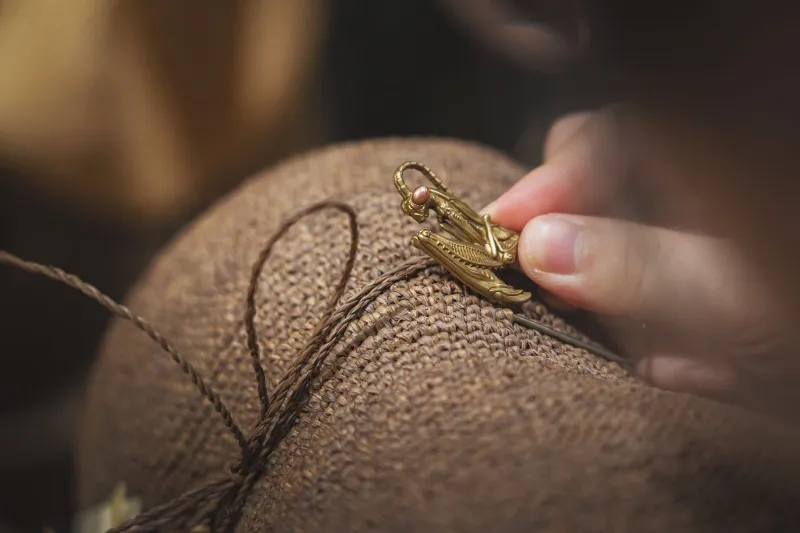
Somewhere in a small apartment in East Atlanta, Kezia Fontaine is bent over a six-panel oversized cap with a needle threaded in gold silk. She's been working on this piece for eleven hours. It's not a commission — it's a personal project, a portrait of her grandmother rendered entirely in embroidery thread across the front panel of a wide-brim structured cap. She'll post it when it's done. The DMs, she already knows, will be immediate and overwhelming.
Kezia is one of a few hundred — maybe more — independent artists across the US who've turned oversized caps into their primary canvas. They work in embroidery, hand-painting, patchwork, dyeing, beading, and combinations of all five. They sell on Instagram, through their own websites, at pop-ups in cities from Portland to Miami. Their waitlists are months long. Their prices, which can run anywhere from $80 to over $600 for a single piece, rarely slow anyone down.
This is the cap customization movement. And it's a lot bigger, and a lot more sophisticated, than most people outside of it realize.
Why Caps, and Why Now
The oversized cap is, structurally speaking, a pretty ideal canvas. The front panel offers a flat, stable surface for detailed work. The brim can be painted, dyed, or embellished. The crown can carry texture and dimension. And unlike a jacket or a pair of pants, a cap is worn at face level — the first thing people see, the thing that gets photographed, the piece that defines the whole look.
For artists who want their work to be seen, that's not a small thing.
"A painting on a wall reaches whoever walks into that room," says Jordan Reyes, a hand-painter and embroiderer based in Los Angeles who goes by @jordanwears on Instagram and has over 90,000 followers. "A cap goes everywhere the person wearing it goes. It's in every photo, every video, every room they walk into. The reach is completely different."
Jordan started customizing caps in 2019, initially as a way to make his own wardrobe feel more personal. When he posted his first few pieces online, the response was immediate enough that he quit his day job within a year.
The Techniques Driving the Movement
What makes this community particularly interesting is the range of approaches artists are bringing to the work. There's no single aesthetic, no dominant technique. The movement is defined by its diversity.
Embroidery remains the most popular method — and the most technically demanding. Artists like Kezia and a Chicago-based creator named Priya Anand (@patchworkpriya) work in incredibly fine detail, producing portraits, landscapes, and abstract compositions that would look at home in a gallery. Priya's specialty is botanical illustration — dense, layered floral designs that wrap around the full circumference of a cap, front to back.
"People always think embroidery is a slow art," Priya says. "And it is. A complex piece can take me fifteen, twenty hours. But that's the point. You're paying for time, for skill, for something that literally cannot be replicated by a machine at this level of detail."
Hand-painting attracts artists with more graphic sensibilities. Using fabric paint and specialized markers, painters like Jordan and a Brooklyn-based artist named Dez Okafor (@dezmakes) bring a graffiti-adjacent energy to their work — bold lines, color blocking, lettering that references both street art and fine art traditions simultaneously.
Patchwork and appliqué is having a particular moment right now, with artists layering different fabrics, textures, and materials onto cap panels to create three-dimensional compositions. Some pieces incorporate vintage fabric, denim scraps, or even repurposed garment pieces, giving the work an explicitly nostalgic, archival quality.
The Buyers: Why People Are Paying Up
The economics of this market are genuinely surprising to outsiders. A mass-produced cap from a major brand might run $35 to $80. A custom piece from a respected cap artist can cost ten times that. And the market is not just surviving — it's expanding.
The explanation isn't hard to find if you spend any time talking to the people buying these pieces.
"I have maybe four caps I actually care about," says Marcus, 31, a graphic designer in Seattle who commissioned a custom portrait cap from an embroiderer he found on Instagram. "Everything else is just stuff. But this cap — I know exactly who made it, I know how long it took, I know it exists nowhere else in the world. That's a completely different relationship with an object."
This is the driving logic of the whole movement: in an era of infinite mass production, scarcity and handmade origin have become luxury signals. Gen Z in particular has demonstrated a consistent willingness to pay more for things that are genuinely one-of-a-kind — not artificially limited by a brand, but actually irreproducible because they were made by human hands.
The customization market also intersects with a broader cultural appetite for direct creator relationships. Buying from @patchworkpriya isn't just buying a cap — it's supporting an independent artist, participating in a creative community, and getting something with a story attached to it. That story is part of the product.
The Social Media Engine
Instagram and TikTok have been central to the growth of this movement in ways that are hard to overstate. The visual nature of the work makes it perfectly suited to both platforms, and the process content — time-lapses of embroidery in progress, before-and-after reveals, studio footage — performs exceptionally well.
Many of the most prominent cap artists have built audiences that rival mid-tier fashion brands, with engagement rates that larger brands would pay enormous sums to achieve. The authenticity of independent creators, the visible labor and skill, and the parasocial connection audiences form with artists they've watched work for years — all of it creates a marketing ecosystem that costs almost nothing and converts at a remarkable rate.
Where the Movement Is Headed
The cap customization world is starting to attract attention from the broader fashion industry, and the artists within it are navigating that attention carefully. A few have taken on brand collaborations. Most are protective of their independence.
Kezia, for her part, isn't interested in scaling. "The whole point is that it's made by me, for one person," she says. "The moment I start producing volume, I've made something completely different. And what I'm making right now is exactly what I want it to be."
She finishes a thread, holds the cap up to the light, and studies the portrait of her grandmother looking back at her from the front panel. Eleven hours of work. One cap. One story.
That's the whole idea.