The Silent Signal: How Bold Headwear Became the Power Move of America's Most Intentional People
Photo: confident entrepreneur creative professional wearing oversized cap in modern workspace, via www.makemebetter.net
There's a version of power dressing that involves a tailored suit, a firm handshake, and a watch that costs more than a car. And then there's the other version — the one that walks into a creative meeting in a structured, wide-brim oversized cap and immediately commands every set of eyes in the room without saying a word.
The second version is winning right now. And it's not a coincidence.
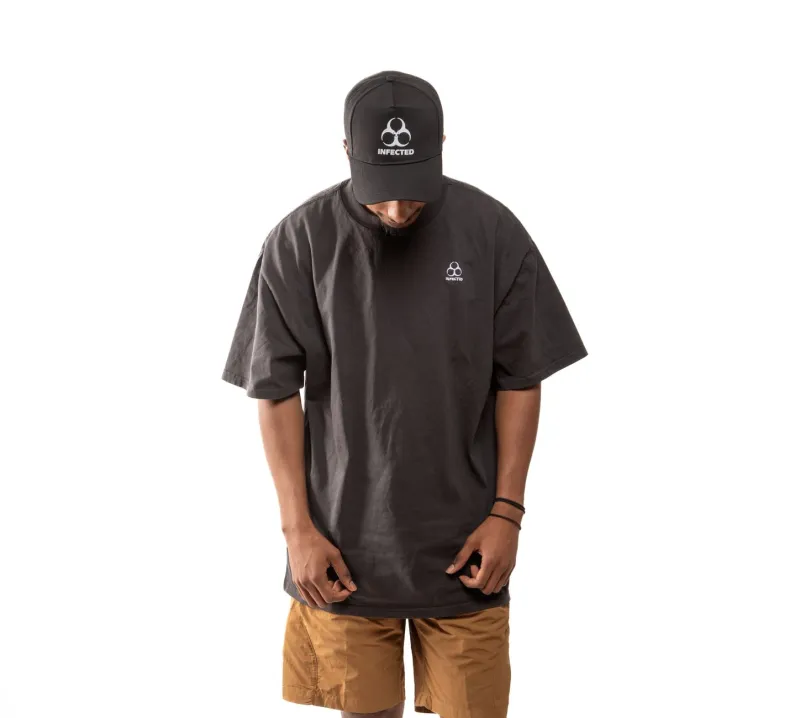
Across industries — music, tech, fashion, sports, entrepreneurship — a distinct pattern is forming among people who operate at the top of their fields. They're making oversized, statement headwear a consistent, visible part of how they move through the world. Not as a costume. Not as an afterthought. As a deliberate extension of their identity and their brand.
The Cap as Personal Brand Architecture
Personal branding used to be mostly digital — your website, your LinkedIn, your Instagram grid. But the people who are really good at it understand that the physical self is the first thing anyone actually encounters. Before your portfolio, before your pitch deck, before your follower count — there's you, in a room, wearing whatever you decided to wear that morning.
For a growing number of high-performing creatives and entrepreneurs, that decision consistently includes an oversized cap.
Take Devon, a 33-year-old creative director running a mid-size branding agency in Austin. He's worn a structured oversized cap to every client meeting, every pitch, every industry event for the past four years. Not the same cap — he rotates through a collection of about twelve — but always the same silhouette. Always intentional.
"It's part of my visual language," he says. "My clients remember me. Not just my work — me. And the cap is a big part of that. It tells people I'm not trying to disappear into the background. I'm here with a point of view."
That consistency is the key word. A personal brand isn't built on occasional gestures. It's built on reliable signals — the things people associate with you every time they see you. The cap, worn consistently and with intention, becomes a visual signature.
What Others Actually See
There's research to back up what Devon is describing intuitively. Studies in social perception consistently show that people who make distinctive, intentional aesthetic choices are rated as more creative, more confident, and more competent than those who dress in ways perceived as generic or unremarkable. This is sometimes called the red sneaker effect — a term coined by researchers at Harvard Business School who found that people who deviate from dress norms in high-status environments are often perceived as higher-status than those who conform.
The logic: if you're willing to show up differently, it signals that you're secure enough not to need the armor of conformity. And security reads as authority.
An oversized cap in a room full of baseball caps — or no caps at all — functions exactly this way. It's a deviation. A deliberate one. And people read deliberate deviations as confidence.
"When someone walks in wearing something that takes commitment," says behavioral consultant and executive coach Tamara Wells, "the room adjusts. Not because the hat is impressive. Because the person wearing it clearly didn't dress by accident. That intentionality transfers. People start assuming it shows up in their work too."
Athletes Who Moved the Needle
Sports has always been one of the most visible proving grounds for personal style as power. And in recent years, the tunnel walk — that pre-game moment when athletes enter arenas in their own clothes, documented by every camera in the building — has become one of the most-watched style stages in American culture.
Oversized and structured caps have become a consistent presence in these moments. Athletes from the NBA, NFL, and MLB have been photographed arriving to venues in wide-brim and oversized fitted caps that clearly weren't grabbed off a shelf as an afterthought. They're coordinated, intentional, often from independent or limited-run brands.
The message those choices send isn't subtle: I know who I am off the court, off the field, off the diamond. I have taste. I have range. I'm not just an athlete — I'm a person with a perspective.
That's a powerful signal, and it resonates far beyond sports. Fans, brands, and media all respond to athletes who demonstrate that kind of self-awareness. And the cap is often the most visible piece of that statement.
Entrepreneurs and the Art of Standing Out in a Crowd of Suits
In startup and entrepreneurship culture, there's long been an unofficial dress code of studied casual — the hoodie, the clean sneaker, the understated flex. But a subset of founders and operators are moving toward something more visually distinct, and oversized headwear is showing up in that shift.
Jasmine, a 28-year-old founder of a wellness product company based in Atlanta, started wearing oversized caps to investor meetings about two years ago after what she describes as a moment of clarity.
"I was dressing to disappear," she says. "Trying to look 'founder-y' in a way that I thought investors expected. And I wasn't getting the results I wanted. A mentor told me to just show up as myself. I started wearing what I actually wear. The cap was part of that. And something changed in how people engaged with me."
Jasmine's theory is that authenticity in appearance signals authenticity in business. "Investors are betting on people as much as ideas. If you look like you're performing a role, they sense it. If you look like yourself — even if 'yourself' is bold or unconventional — there's something trustworthy about that."
She's raised two rounds since making the shift. She's not crediting the cap. But she's not taking it off either.
The Quiet Power of Going Big
What ties Devon, Jasmine, and the athletes together isn't a shared aesthetic exactly. It's a shared philosophy. They've all made a choice to take up visual space — to signal, without words, that they arrived with intention.
The oversized cap is particularly good at carrying that message. It's not aggressive. It's not loud in the way that a graphic tee with a slogan is loud. It's structural. Architectural. It says I thought about this in a way that feels more considered than reactive.
In high-stakes environments — a pitch meeting, a creative review, a networking event full of people trying to be memorable — that considered quality is rare. And rare things get noticed.
You don't have to be famous for this to work. You don't need a platform or a following or a brand deal. You just have to be willing to show up in a way that's unmistakably you. Sized up, brim out, ready for whatever the room has.
That's not just a style choice. That's a statement of intent. And the most successful people in the room already know it.