Big Hat Energy: The Surprising Science of How Oversized Caps Make People Take You More Seriously
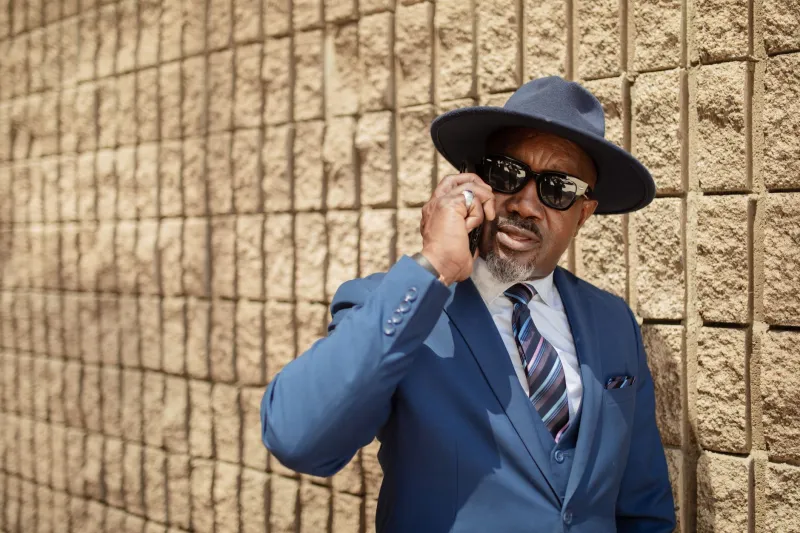
You walk into a room. Before you say a single word, people have already made up their minds about you. That's not paranoia — that's human psychology doing what it was built to do. And if you're wearing an oversized cap, those snap judgments might be working in your favor more than you ever realized.
This isn't just vibes-based speculation. There's a growing body of research on visual hierarchy, presence, and the psychology of authority that suggests what you put on your head carries serious social weight. Like, more than most people are ready to admit.
The Brain Sees Height and Size as Power
Here's where the science gets interesting. Human beings have been wired, since basically forever, to associate physical height and visual scale with dominance and competence. It's the same reason CEOs are statistically taller than average, and why cameras shoot politicians from slightly below eye level. Scale reads as authority.
An oversized cap extends your silhouette upward. It adds visual mass to the top of your frame — the part of the body people look at first. According to behavioral researchers studying first impressions, the upper portion of a person's appearance, particularly anything framing the face, carries disproportionate weight in how strangers form initial assessments.
Dr. Naomi Castillo, a social psychologist based in Chicago who studies nonverbal communication in professional environments, puts it plainly: "We're not consciously thinking 'that person's hat is large, therefore they're capable.' But the visual processing happens faster than conscious thought. A strong, defined silhouette — especially around the head — registers as presence. And presence is one of the first proxies people use for competence."
The Confidence Loop
There's another layer here that's just as compelling: what the hat does to you, not just to the people looking at you.
Researchers at Northwestern University published work a few years back on a concept called "enclothed cognition" — the idea that what you wear doesn't just signal things to others, it actually shifts your own psychological state. When you put on something that makes you feel powerful or intentional, you literally perform better. Your posture adjusts. Your voice gets steadier. You make more eye contact.
Now apply that to headwear. Slapping on a well-chosen oversized cap isn't just a style move — it's a psychological one. Style consultant Marcus Webb, who works with creative professionals in Atlanta and New York, sees this play out constantly with his clients.
"The guys who come in wearing bold headwear — especially the ones going big with the brim — carry themselves differently," he says. "There's a deliberateness to it. You don't accidentally throw on an oversized cap. You chose that. And people can feel the difference between someone who chose their look and someone who just grabbed whatever was clean."
That intentionality, Webb argues, is what people actually read as competence. It's not the hat itself — it's the signal that you make decisions on purpose.
What It Says in Professional and Social Settings
The context matters, obviously. An oversized cap at a board meeting in a traditional finance firm is going to land differently than the same cap at a creative agency or a networking event in a major city. But across both professional and social settings, the core dynamic holds.
In creative industries — design, music, media, fashion, tech — bold headwear has become a legitimate power signal. It says you're plugged in, that you have aesthetic taste, and that you're not trying to disappear. In industries where differentiation is the whole game, that reads as a serious asset.
In social settings, the psychology shifts slightly. On a first date, at a party, meeting new people — an oversized cap does something specific. It gives people something to respond to. It opens the door for someone to say "where'd you get that" or "I've been looking for something like that." Social psychologists call this an "approach facilitator" — something about your appearance that makes it easier for others to initiate contact.
"Wearing something that's a little unexpected, something that has a point of view, tells people you're interesting before you've opened your mouth," says Dr. Castillo. "And interesting people are almost universally perceived as more capable, more worth knowing."
The Authority of Intentional Dressing
There's a deeper principle underneath all of this, and it's one the most stylistically self-aware people have always understood: dressing with intention is its own form of competence signaling.
When someone puts thought into what they're wearing — when every piece feels chosen rather than defaulted to — observers register that as evidence of broader intentionality. The logic, even if it's unconscious, goes something like: this person pays attention to details, makes deliberate choices, and cares about the impression they make. Those are the exact qualities people associate with competence.
An oversized cap, done right, is one of the clearest expressions of intentional dressing available right now. It's not a safe choice. It's not invisible. It's a decision. And decisions, it turns out, are exactly what people are looking for when they're trying to figure out who in the room is worth paying attention to.
Sizing Up Your Presence
None of this means you need to show up everywhere in the biggest cap on the market and expect the world to hand you a promotion. Context, fit, and execution still matter. A cap that's wildly out of proportion with your build or the setting reads as costume, not confidence. The goal is deliberate scale — something that extends your presence without tipping into costume territory.
But here's the takeaway: the next time someone tells you to tone it down, to go smaller, to not stand out so much — know that the science is not on their side. Bigger, when it's intentional, doesn't read as trying too hard. It reads as knowing exactly what you're doing.
And knowing what you're doing? That's the whole definition of competence.